10 Tropical Backyard Landscaping Ideas for a Vacation Vibe
Every time I come back from a beach vacation, I find myself wishing I could bring a piece of paradise home with me. The sound of palm leaves swaying, the pops of vibrant flowers, the cozy hammocks tucked away in the shade. It’s a vibe we all crave.
The good news? You don’t need a plane ticket to feel like you’re on island time. With a few clever landscaping ideas, your backyard can become the tropical escape you’ve always dreamed of.
10 Tropical Backyard Landscaping Ideas
1. A Lush, Multi-Layered Garden Path

Image: https://www.reddit.com/user/lynchyinc/
What Makes It Unique
This design stands out because of its use of varied plant heights and textures to create an immersive, almost jungle-like experience. The curving path adds a natural, organic feel, and the light-colored stones provide a beautiful contrast to the deep greens and vibrant reds of the plants. It’s a great example of how to make a smaller space feel larger and more mysterious.
Materials Needed
- Gravel or light-colored stones
- Landscaping fabric
- Various tropical plants
- Fatsia Japonica
- Banana plants
- Cordyline
- Canna lilies
- Begonias
How to Do It
- Define Your Path: Use a garden hose or rope to outline a gentle, curving path. Adjust until you are happy with the shape and flow.
- Prepare the Path Area: Dig out the defined path area to a depth of approximately 4-6 inches.
- Lay Landscaping Fabric: Place a layer of landscaping fabric over the dug-out path to suppress weeds, securing it with landscape staples.
- Add Path Material: Fill the path with your chosen gravel or light-colored stones, raking it smooth and level.
- Position Taller Plants: Arrange your tallest tropical plants, such as banana plants or palms, towards the back of the planting beds to create a lush, overhead canopy.
- Place Medium-Sized Plants: Introduce medium-sized plants like Fatsia Japonica and Cordyline in the middle layer of the beds to add visual volume and texture.
- Plant Smaller Accents: Along the edges of the path, plant smaller, colorful species like Begonias and Canna lilies to provide vibrant accents and guide the eye along the pathway.
- Water and Mulch: Water all newly planted areas thoroughly. Consider adding a layer of mulch to help retain soil moisture and regulate temperature.
2. Vibrant Flowering Borders and Focal Points
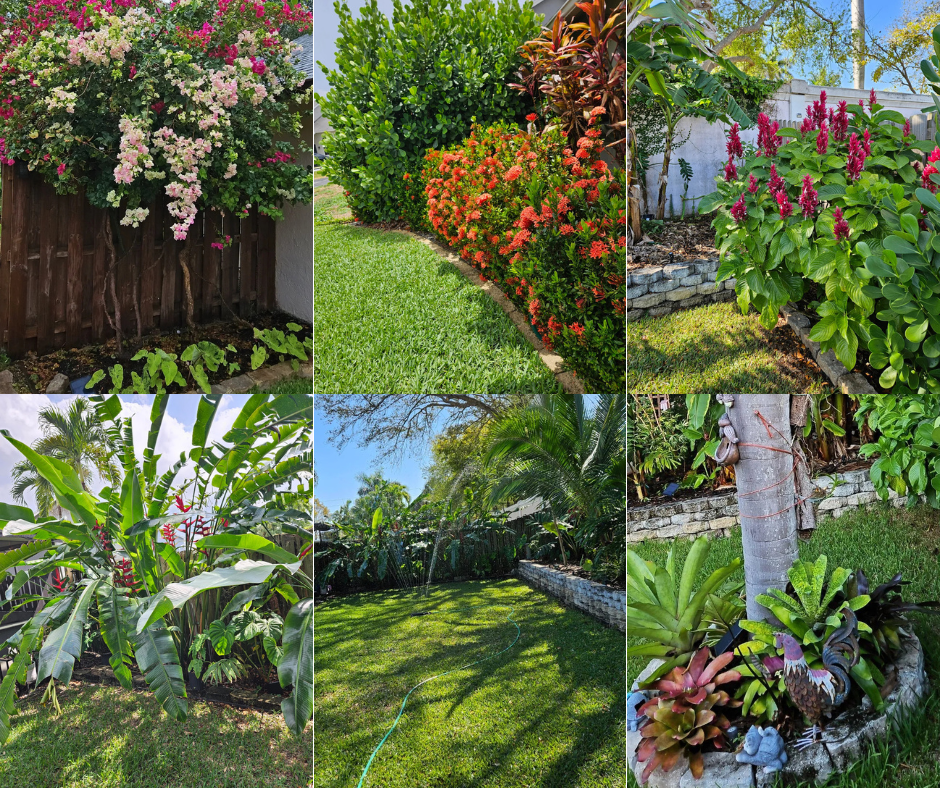
Image: reddit.com
What Makes It Unique
The use of brightly colored flowering plants in a structured way. A hedge, a climbing fence accent, or a single specimen plant, everything gives this garden a curated yet wild feel. It’s a great example of how to combine large, leafy plants with smaller, densely flowering ones to create a dynamic and beautiful contrast. The inclusion of decorative elements like the statue and a variety of pots also adds a personal touch.
Materials Needed
- Ixora
- Bougainvillea
- Red ginger (Alpinia purpurata) or Heliconia
- Croton
- Bromeliads
- Raised bed edging material (e.g., stone or concrete pavers)
- Mulch
How to Do It
- Plan Your Layers: Start by choosing the locations for your borders and focal points. Consider using a raised bed to add dimension and create a clear boundary between your lawn and garden beds.
- Install Edging: If you’re building a raised bed, install your chosen edging material. This will not only define the space but also help contain soil and mulch.
- Create Focal Points: Plant a showstopper like a Red Ginger or a cluster of Heliconia in a prominent spot. Their unique flower shape and color will immediately draw the eye. You can also group Bromeliads around the base of a palm tree for a unique, layered focal point.
- Build Your Borders: Create a dense, colorful border using plants like Ixora. Plant them in a row to form a low hedge that adds a pop of vibrant color along your path or lawn edge.
- Add Vertical Interest: For fences or walls, use a climbing plant like Bougainvillea. Choose a few different colors (pinks, whites, and reds) and let them grow together for a stunning, multi-colored display that cascades over the fence.
- Use Contrasting Foliage: Mix in plants with different leaf colors and shapes, such as the vibrant reds and yellows of a Croton, to complement the flowering plants and add more visual interest.
- Mulch and Maintain: Apply a layer of mulch to all garden beds to help retain moisture and suppress weeds. Keep all plants well-watered to maintain their lush, vibrant appearance.
3. Tropical Oasis with Poolside Planting
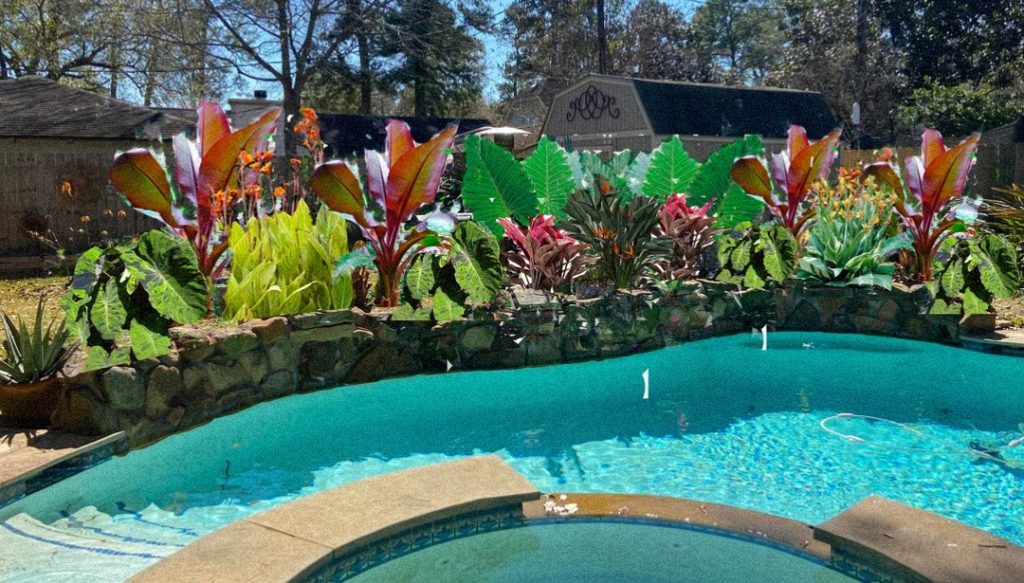
Image: https://www.reddit.com/user/PerfectWorld3/
What Makes It Unique
The unique aspect here is the seamless integration of a swimming pool with dense tropical planting. The varied heights and colors of the plants not only enhance the aesthetic appeal but also provide a natural privacy screen. The careful selection of plants with bold leaves and striking colors instantly transports you to a vacation paradise.
Materials Needed
- Large-leafed plants (e.g., Alocasia, Colocasia)
- Colorful foliage plants (e.g., Cordyline, Croton)
- Upright, tall plants (e.g., Banana plants, Traveler’s Palm)
- Flowering tropical plants (e.g., Bird of Paradise, Heliconia)
- Poolside planters (optional, for smaller spaces)
- Mulch
How to Do It
- Assess Your Space and Sunlight: Before planting, understand the sun exposure around your pool. Most tropical plants thrive in full sun to partial shade.
- Plan Your Layout: Sketch out where you want different heights and types of plants. Place taller plants at the back for a sense of enclosure and privacy, and shorter, colorful ones closer to the pool edge.
- Choose Pool-Friendly Plants: Select plants that can tolerate humidity and occasional splashes from the pool. Avoid plants with excessive shedding of leaves or flowers if you want to keep your pool clean.
- Create Layers:
- Back Layer (Tall): Plant species like banana plants or traveler’s palms to create a dramatic backdrop and privacy.
- Middle Layer (Bold Foliage): Use large-leafed plants like Alocasia or Colocasia for a lush, jungle-like feel. Incorporate colorful foliage plants like Cordyline for visual interest.
- Front Layer (Accents): Place flowering plants such as Bird of Paradise or Heliconia, or vibrant, smaller foliage plants, to add pops of color and draw the eye.
- Planting: Dig holes twice as wide as the root ball and just as deep. Carefully place the plants, backfill with soil, and gently tamp down.
- Mulch: Apply a generous layer of mulch around the plants to retain moisture, regulate soil temperature, and reduce weeds.
- Watering: Water regularly, especially when establishing new plants, to ensure healthy growth. Tropical plants generally prefer consistent moisture.
4. Lakeside Tropical Paradise

Image: https://www.reddit.com/user/dreamscapesbyzury/
What Makes It Unique
The unique element here is the combination of diverse textures and materials. Smooth travertine pavers transition into a curvy pebble border, which then gives way to a vibrant green lawn and a stunning lake view. The strategic placement of palms and colorful ground cover creates a lush, natural boundary that softens the hard lines of the patio and fence. It’s a great example of blending different zones like patio, lawn, and garden to create a cohesive and inviting outdoor living space.
Materials Needed
- Large tropical palms
- Bromeliads
- Colorful ground cover (e.g., Pink Caladiums, Impatiens)
- Black river pebbles or smooth stones
- Travertine pavers
- Outdoor furniture (e.g., chaise lounge, hot tub)
- Raised planter pots
How to Do It
- Define Your Zones: Start by mapping out the different areas of your backyard – the patio, the lawn, and the garden beds. The key is to use different materials to create clear, yet flowing, transitions between them.
- Install Hardscaping: Lay your travertine pavers to create a clean, functional patio space. This serves as the main relaxation and entertainment area.
- Create a Pebble Border: Use a natural, curvy line to separate the lawn and patio. Fill this border with black river pebbles or smooth stones. This adds a beautiful contrast and a textural element that guides the eye through the space.
- Plant Palms: Place large, majestic palms in key locations to provide a sense of height and tropical grandeur. Plant them in garden beds or large planters to frame the view and add vertical interest.
- Add Color and Texture: In the garden beds along the pebble border, plant colorful ground cover like bromeliads or pink caladiums. This pop of color complements the green lawn and the dark pebbles.
- Furnish for Relaxation: Add comfortable outdoor furniture like a hot tub, a chaise lounge, or a small dining set. This makes the space functional and perfect for enjoying the view.
- Consider Other Elements: Integrate small details like garden lights, decorative planters, or a pergola to create a sense of enclosure and add to the overall tropical ambiance.
5. Welcoming Backyard Path with Tropical Plantings
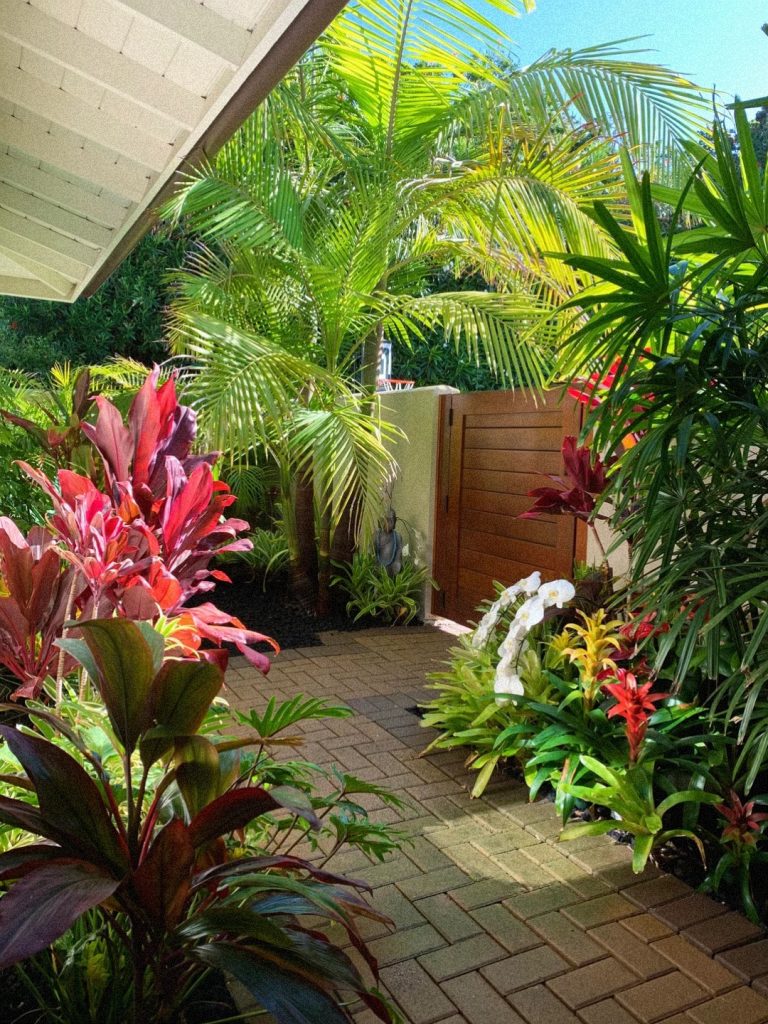
Image: reddit.com
What Makes It Unique
The design is unique for its ability to create a sense of discovery in a small space. By blending a variety of Tropicanna canna lilies, crotons, and cordyline, the path feels dynamic and alive. The placement of a taller palm provides a natural canopy, while the white orchids offer an elegant, unexpected accent. This approach proves that even limited space can be a showcase for tropical beauty.
Materials Needed
- Cordyline (Ti plant)
- Tropicanna canna lilies
- Croton
- Orchids (potted or mounted)
- Bromeliads
- Dwarf palms
- Mulch (dark-colored)
How to Do It
- Map Out Your Planting Areas: Identify the sections along your path where you can create garden beds. If the space is narrow, focus on planting along one side to avoid overcrowding.
- Add Your Foundation Plants: Place a dwarf palm to serve as the main vertical element, providing a sense of height and scale.
- Incorporate Bold Foliage: Plant cordyline and canna lilies with their striking red, burgundy, and orange leaves. Arrange them in clusters to create a powerful color statement that stands out against the green backdrop.
- Introduce Secondary Plants: Add croton for its colorful, variegated leaves, filling in the spaces between the taller plants. This creates a full, layered look.
- Use Strategic Accents: Place pots with elegant orchids or vibrant bromeliads near the entrance or along the path to provide beautiful and intricate details that draw the eye.
- Apply Mulch: Use a dark-colored mulch, like black or brown, to make the colors of the plants pop. This also helps with moisture retention.
- Maintain and Prune: Keep the path clear and well-defined. Regularly prune your plants to maintain their shape and prevent them from overgrowing the path.
6. Modern Tropical Garden with Water Features
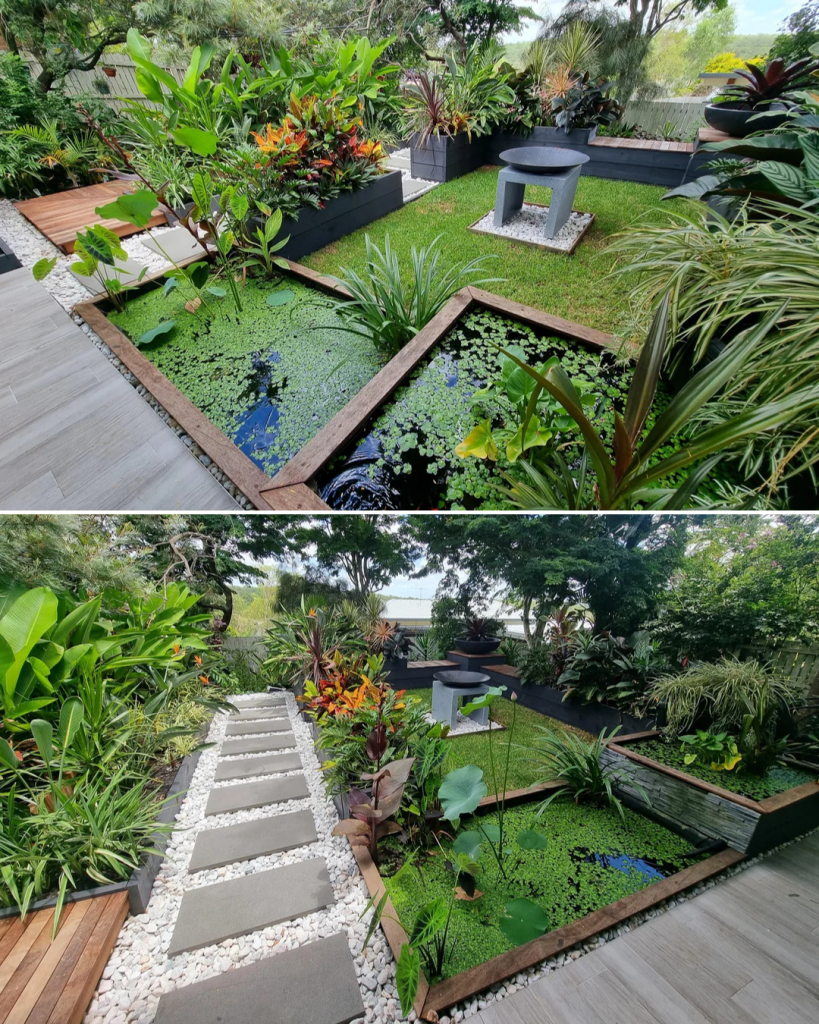
Image: https://www.reddit.com/user/ibzprestige/
What Makes It Unique
This design is a masterclass in contrasting elements. The straight lines of the stepping stone path, raised planters, and wooden pond frames create a clean, contemporary feel, while the surrounding plants burst with wild, tropical energy. The addition of raised water features provides a serene focal point and a habitat for aquatic life like koi fish, which adds a calming, dynamic element to the garden.
Materials Needed
- Large pavers or stepping stones
- White pebbles
- Wood decking or pavers for walkways
- Treated timber or stone for raised beds/pond frames
- Pond liner
- Variety of tropical plants (e.g., Bird of Paradise, Croton, Bromeliads)
- Water plants (e.g., Lotus, Duckweed)
- Outdoor fire pit or bowl
How to Do It
- Define Your Areas: Start by planning the layout. Use a grid or a sketch to outline the path, the raised garden beds, and the water features.
- Build the Raised Beds and Ponds: Construct the frames for your raised planters and ponds using treated timber or stone. Ensure the pond frames are stable and correctly sized for a liner.
- Install the Path: Lay down your pavers or stepping stones. For a clean look, place them over a layer of white pebbles. Make sure the stones are level and secure to create a safe walking path.
- Add Water Features: For the ponds, install a pond liner within the wooden frames. Fill with water and add aquatic plants like lotuses or duckweed. Consider adding koi fish for a lively, tranquil touch.
- Plant the Garden Beds: Fill the raised planters with a high-quality soil mix. Plant a variety of tropical plants, arranging them in layers with taller species at the back and shorter, more colorful plants at the front.
- Place the Focal Point: Position an outdoor fire pit or bowl on a stable, non-flammable base. This acts as a central gathering point and adds a modern, sculptural element.
- Finish with Accents: Add final touches like outdoor lighting, decorative planters, or a small deck area to complete the look and make the space more inviting.
7. A Tropical Escape in a Narrow Backyard
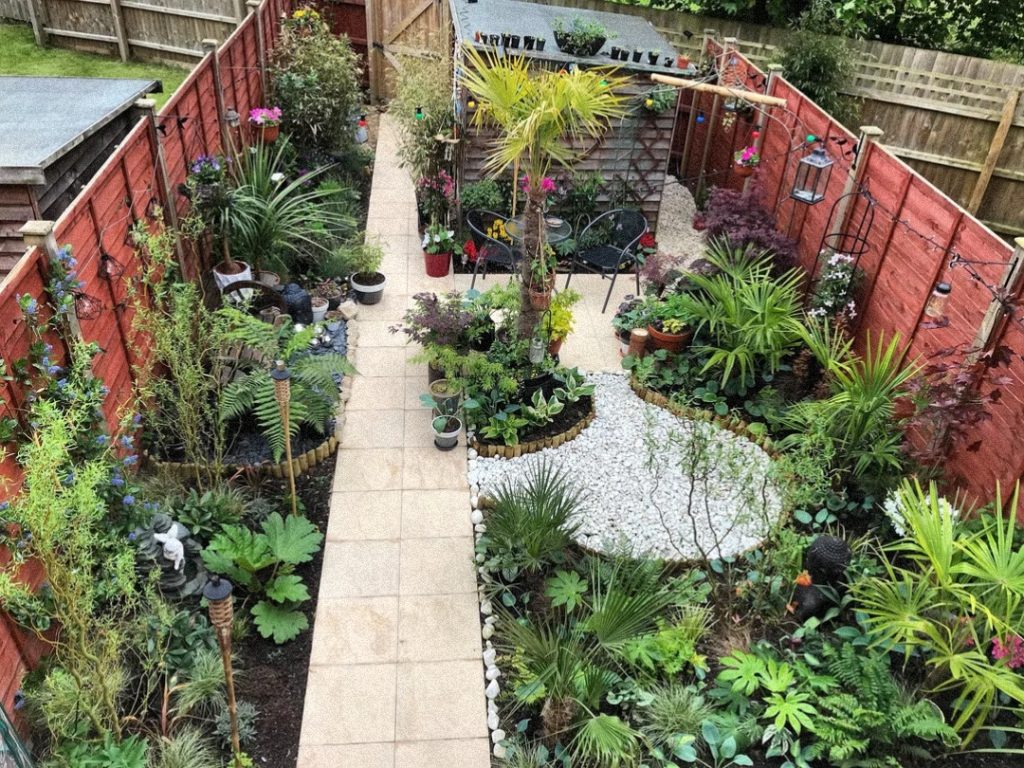
Image: https://www.reddit.com/user/rosstafa1/
What Makes It Unique
This backyard landscaping has its clever use of perspective and zoning. The path meanders rather than running in a straight line, which makes the space feel longer and more dynamic. The garden beds are densely packed with a variety of plants, creating a multi-layered, jungle-like feel. The small seating area at the back provides a cozy destination, while the central white gravel patch serves as a bright, low-maintenance focal point.
Materials Needed
- Pavers or large stepping stones
- White and dark-colored pebbles or gravel
- Variety of ferns (e.g., Tree Fern, Maidenhair Fern)
- Palms (e.g., Dwarf Palm, Fan Palm)
- Large-leafed plants (e.g., Fatsia Japonica, Gunnera)
- Water features or pots with small ponds
- String lights or lanterns
- Garden art (e.g., Buddha statue, animal figurines)
How to Do It
- Map Out Your Path: Design a winding or curved path using pavers. This is crucial for breaking up the straight lines of a narrow yard and creating a sense of journey.
- Create Garden Zones: Divide the space into distinct areas. One side can be a dense planting bed, while the other can feature a clean, minimalist patch of white gravel surrounded by plants. This variation adds visual interest.
- Layer Your Plants: Start with taller plants and palms at the back to create a canopy effect. Fill in the middle with ferns and other leafy plants, then use low-lying plants as ground cover at the front.
- Incorporate Water and Sound: Add a small pond or a self-contained water feature. The sound of trickling water will add to the serene, tropical ambiance.
- Furnish and Decorate: Place a small bistro set or a bench in a secluded spot. Use pots to add color and texture. Hang string lights or lanterns to make the space usable and magical in the evening.
- Add Personal Touches: Integrate decorative elements like statues, torches, or hanging baskets to reflect your personal style and complete the look.
8. The Shaded Tropical Retreat
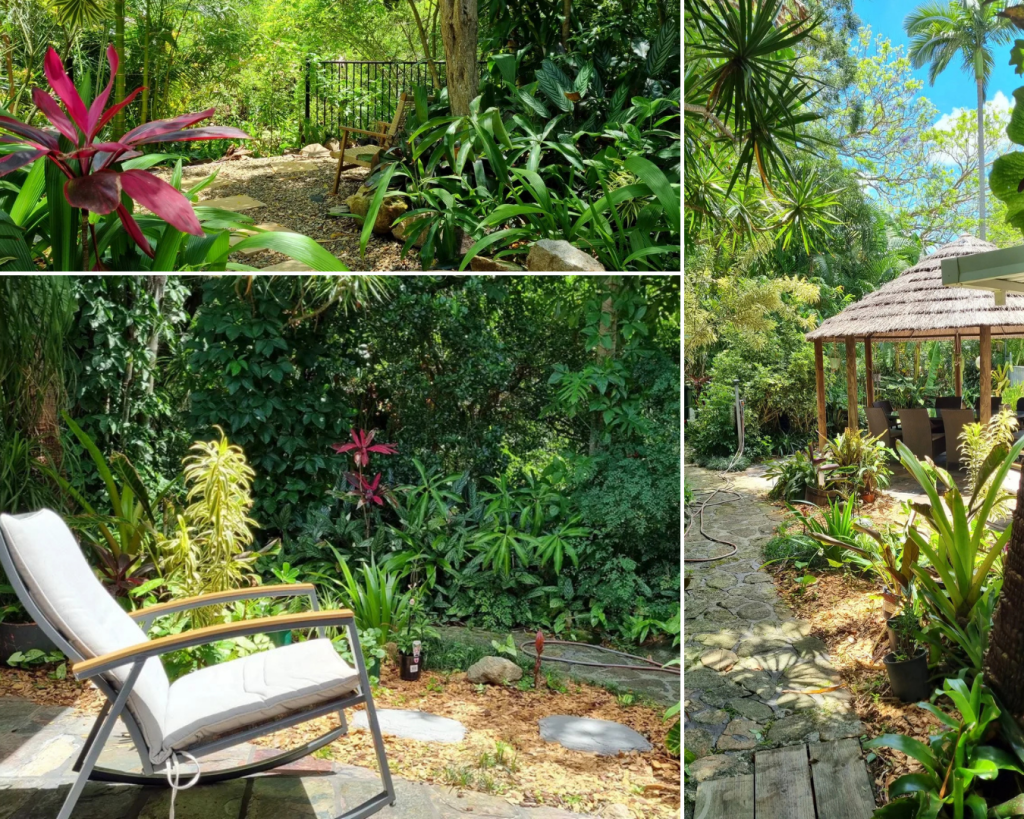
Image: https://www.reddit.com/user/FondantIndependent60/
What Makes It Unique
This design’s key feature is its mastery of shade-loving tropical plants. Instead of relying on direct sun, it creates a peaceful, secluded atmosphere by using a rich tapestry of textures and shades of green. The winding path and various seating areas invite you to slow down and enjoy the serene environment. The large, mature trees provide a natural ceiling, making the space feel like a cozy, outdoor room.
Materials Needed
- Shade-tolerant tropical plants (e.g., Elephant Ears, various ferns, Bromeliads)
- Understory plants with colorful foliage (e.g., Ti plant or Cordyline)
- Stepping stones or flagstone pavers
- Gravel or wood chips for the path
- A tiki hut or thatched-roof gazebo (optional but highly recommended)
- Outdoor furniture (e.g., lounge chairs, dining set)
How to Do It
- Assess Your Shade: Identify the areas that receive the most shade. This will be your primary planting zone. Focus on selecting plants that thrive in these conditions.
- Define a Path: Lay down stepping stones or flagstone pavers in a meandering line. Fill the spaces between the stones with gravel or wood chips to create a soft, natural-looking path that encourages a leisurely walk.
- Create a Seating Area: Designate a space for a seating area. This could be a small patio with a lounge chair for a quiet corner, or a larger area with a dining set under a gazebo for entertaining.
- Plant in Layers:
- Canopy Layer: If you don’t have existing trees, consider planting fast-growing, shade-tolerant trees.
- Mid-Level Layer: Use tall, broad-leafed plants like Elephant Ears or Philodendrons to fill out the space.
- Understory and Groundcover: Plant smaller, delicate ferns and colorful Bromeliads or Ti plants to add interest at eye level and below.
- Add Architectural Elements: A tiki hut or a simple thatched-roof gazebo instantly transforms the space, providing shelter and a strong tropical vibe.
- Furnish and Accent: Place comfortable outdoor furniture in your seating areas. Add small pots with plants, wind chimes, or other personal touches to complete your serene retreat.
9. A Focal Point in a Tropical Garden
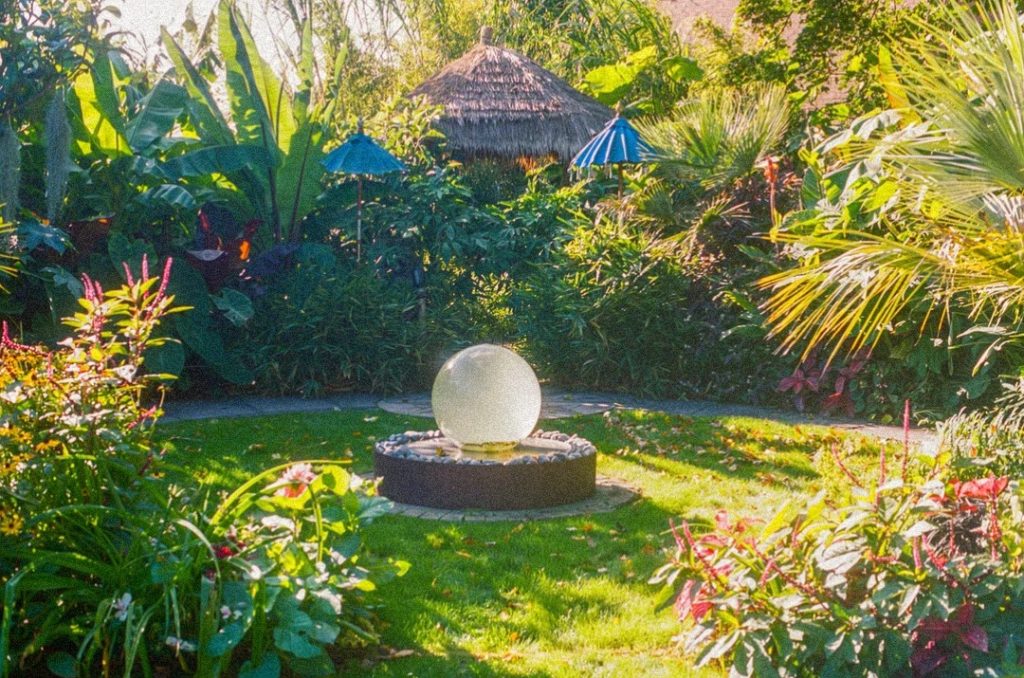
Image: https://www.reddit.com/user/Jungle_George_/
What Makes It Unique
This design’s key strength is the strategic use of a modern, minimalist water feature as a centerpiece. The sleek, smooth orb provides a striking contrast to the wild, varied textures of the surrounding tropical plants. The path and garden beds are arranged to lead the eye toward the feature, creating a clear destination within the garden. This design is also a great example of using different plant heights to frame a view, with low plants in the foreground, medium-height ones around the centerpiece, and taller ones in the background.
Materials Needed
- Spherical water feature or similar garden art
- Large, dark-colored planter or pond basin
- Pavers or stones for the path
- Grass or a low-maintenance ground cover
- Taller, broad-leafed plants (e.g., Banana plants, Alocasia)
- Medium-sized tropical plants (e.g., Cordyline, various shrubs)
- Flowering plants (e.g., Canna lilies, Begonias)
- Two small tiki umbrellas (optional)
How to Do It
- Select Your Focal Point: Choose a centerpiece that complements your tropical theme. This could be a modern water feature, a large statue, or a fire pit.
- Position the Focal Point: Place the centerpiece in a central location within an open area of your backyard. Ensure there’s enough space around it for planting and a clear view from your patio or seating area.
- Build a Pathway: Create a path that leads to or around the focal point. Use pavers or a similar material that contrasts with the surrounding grass and plants to define the route.
- Create Plant Layers:
- Background: Plant taller species like banana plants or palms behind the focal point to create a lush wall of green that frames the view and provides a sense of enclosure.
- Middle Ground: Use medium-height plants such as cordyline or various shrubs to fill in the space around the focal point, creating a soft transition between the centerpiece and the background.
- Foreground: Place shorter, colorful flowering plants in front of the middle layer to add pops of color and draw the eye inward.
- Add Finishing Touches: Consider adding small, thematic accents like the tiki umbrellas seen in the photo to complete the vacation vibe. Use strategic lighting to illuminate the centerpiece at night.
10. Tropical Garden Beds and Defined Outdoor Zones
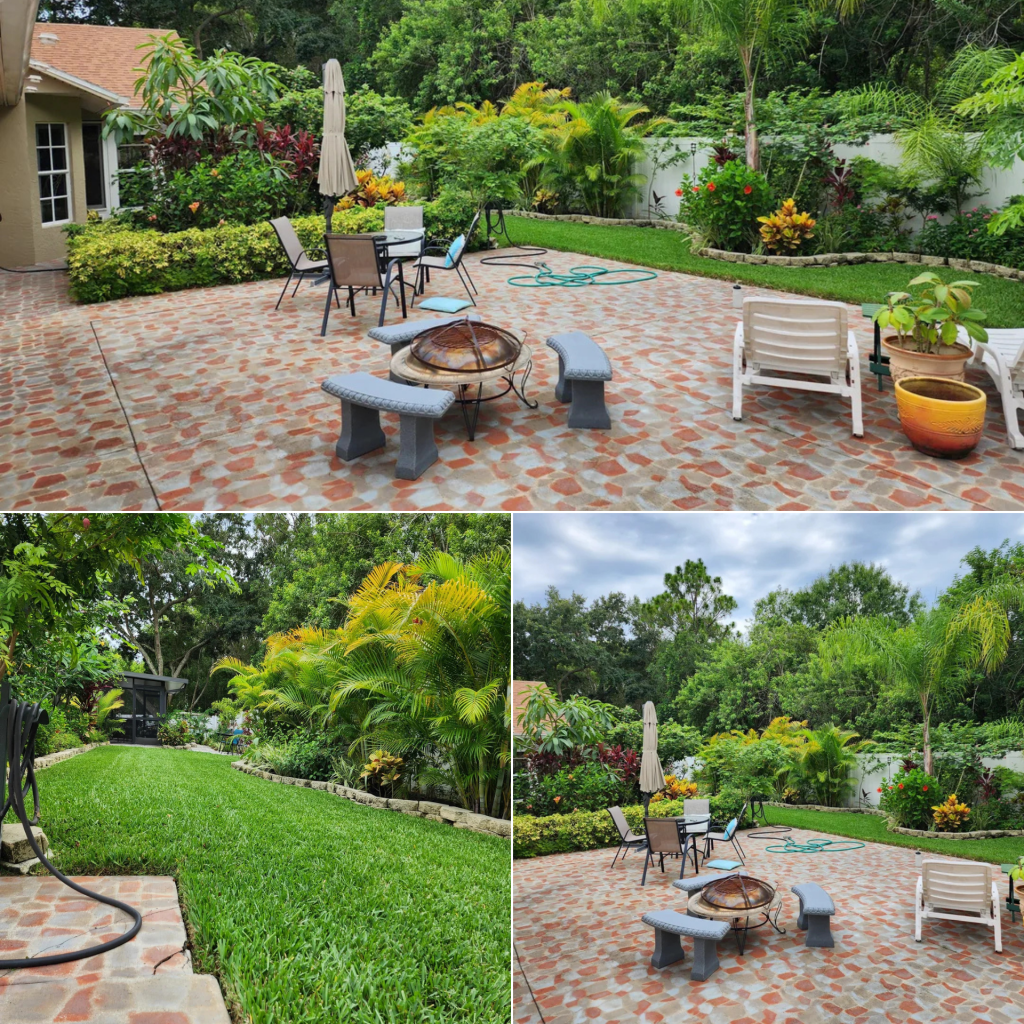
Image: https://www.reddit.com/user/crockpocket/
What Makes It Unique
What makes this design so successful is the contrast between the well-manicured lawn and the wild, organic feel of the tropical beds. The brick-like patio provides a warm, inviting space for entertaining, while the raised garden beds add a structural element that separates the functional areas from the natural-looking foliage. The various plant heights and colors, from the tall palms to the ground cover, create a rich tapestry of life along the perimeter.
Materials Needed
- Lawn turf or seed
- Pavers or decorative brick for the patio
- Stone edging or curved bricks for the garden beds
- Variety of palms (e.g., Areca palm)
- Colorful foliage plants (e.g., Croton, Cordyline)
- Flowering tropical plants (e.g., Hibiscus)
- Fire pit and outdoor seating
- Decorative planters
How to Do It
- Plan Your Zones: Divide your backyard into distinct areas. One for hardscaping like a patio, one for the lawn, and one or more for garden beds. Use a garden hose to outline the curves of your garden beds.
- Create the Hardscape: Install your patio pavers. This will be the foundation for your outdoor living space. Make sure the surface is level and well-compacted.
- Define the Garden Beds: Use stone edging or brick to create raised, curvy borders for your garden beds. This not only looks great but also helps contain the soil and prevents grass from creeping into your plants.
- Plant in Layers:
- Back Layer: Plant taller, fast-growing palms along the back fence to create a privacy screen and a sense of height.
- Middle Layer: Fill in with colorful foliage plants like Crotons and Cordyline, creating a vibrant middle layer.
- Front Layer: Use lower-growing plants and flowers like Hibiscus along the front edge of the beds to add a pop of color that is easily visible from the patio and lawn.
- Add Functional Elements: Place a fire pit and comfortable seating on the patio. This turns a simple paved area into a cozy gathering spot.
- Decorate with Pots: Use decorative planters on the patio to bring the tropical theme onto the hardscape. This creates a seamless transition between the different zones.